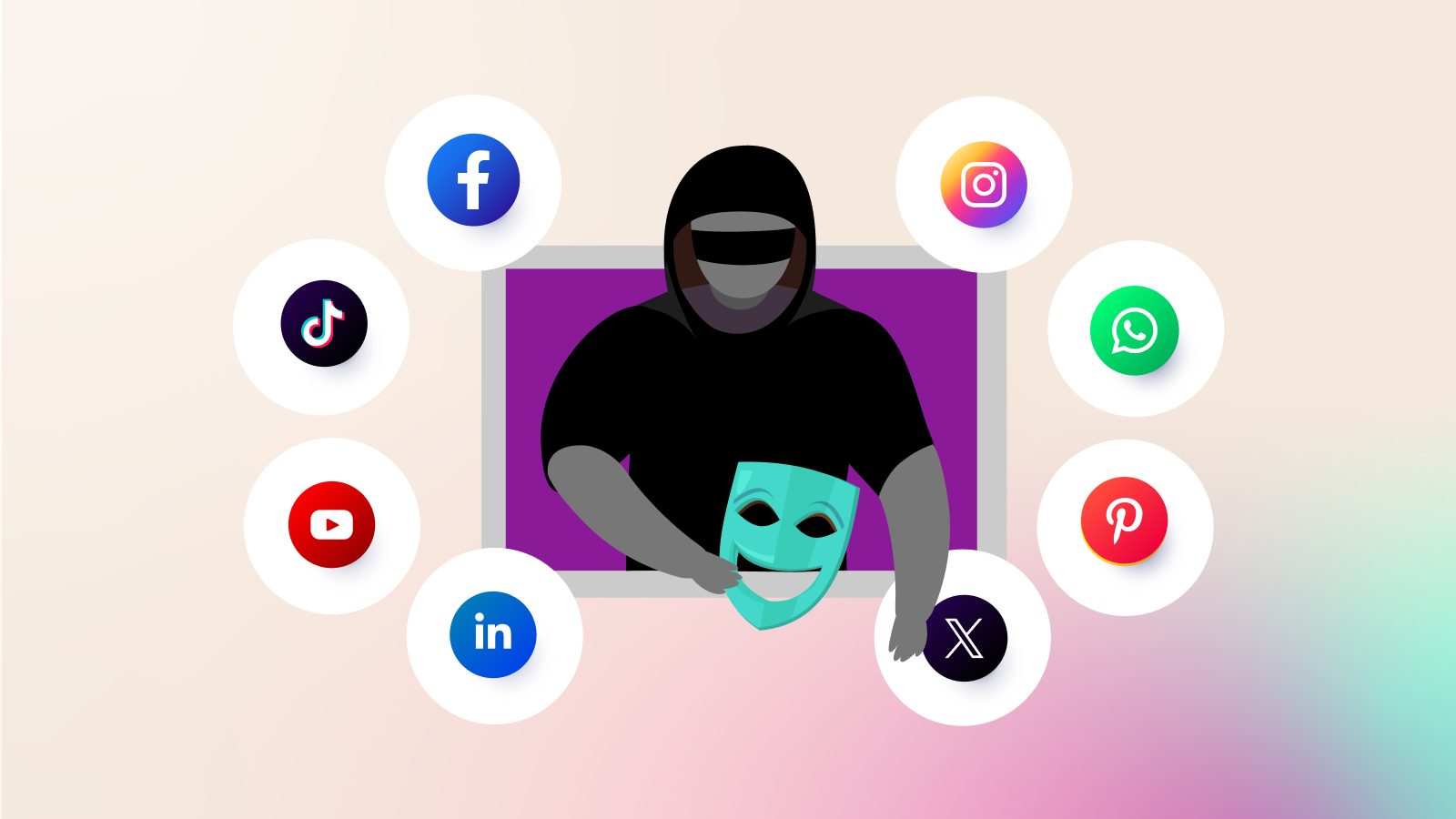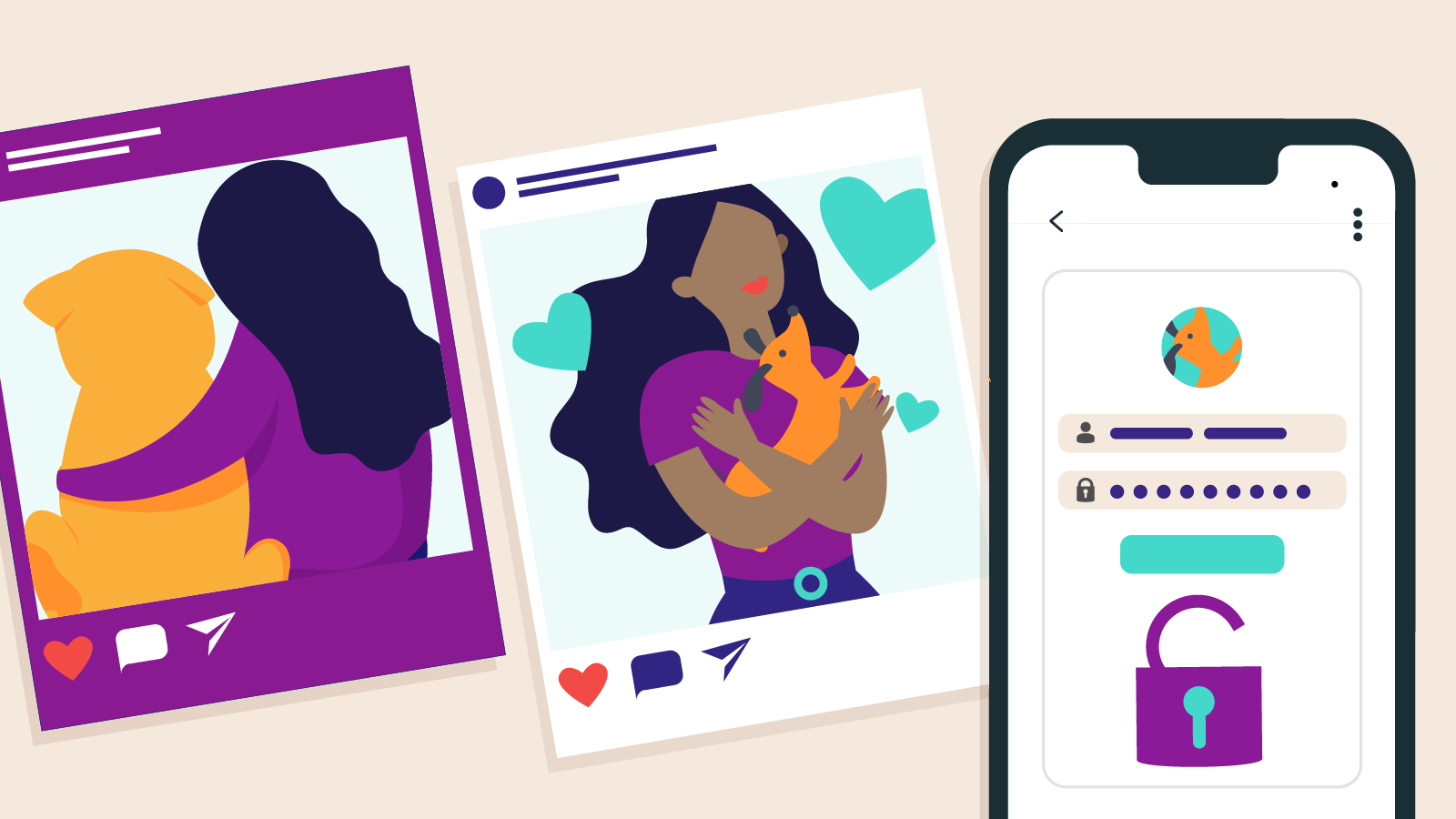
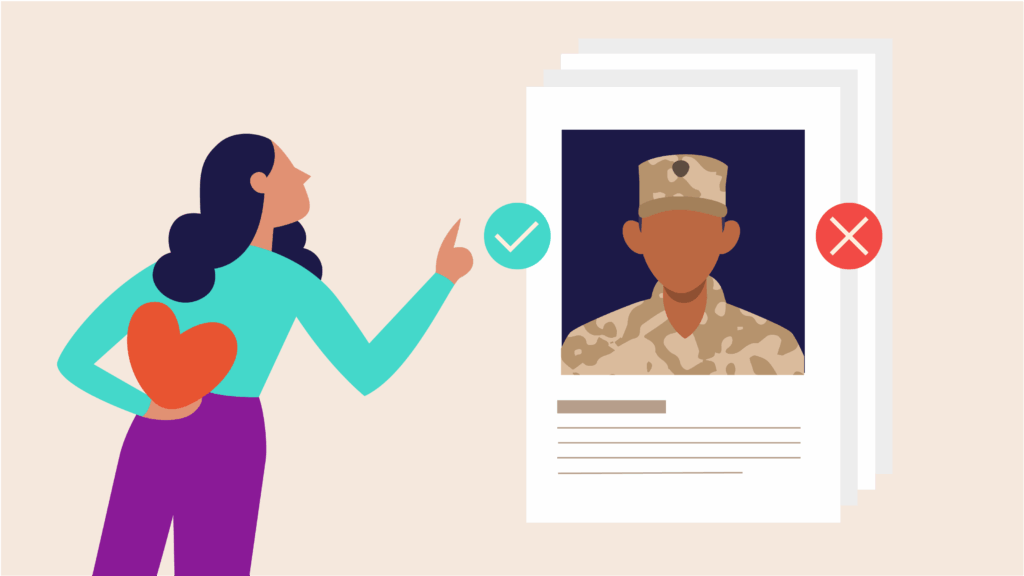
Military romance scams are one of the cruellest forms of online fraud, blending emotional manipulation with sophisticated storytelling to win trust, affection and, ultimately, access to your money or personal information. Scammers aren’t just pretending to be charming strangers online. Increasingly, they’re posing as active-duty soldiers, using stolen photos, fabricated credentials and convincing backstories to make their lies feel real.
Key Takeaways:
- Military romance scams are emotionally and financially manipulative.
- Watch for warning signs: Rapid romance, refusal to meet in person, avoiding video calls, requests for money, and moving conversations to private platforms.
- Trust your instincts and stay informed: If something feels too good to be true, too fast, or too complicated, it might be a scam. Awareness and education are your best defence.
What is a military romance scam?
Military romance scams are one of the cruellest forms of online fraud, blending emotional manipulation with sophisticated storytelling to win trust, affection and, ultimately, access to your money or personal information.
Scammers aren’t just pretending to be charming strangers online. Increasingly, they’re posing as active-duty soldiers, using stolen photos, fabricated credentials and convincing backstories to make their lies feel real.
Common storylines to watch for
Scammers typically rely on believable, high-pressure scenarios designed to trigger sympathy and urgency. Some red flags include:
- “I’m being discharged soon but need help covering travel costs.”
- “My bank account is frozen while I’m on duty – can you help me?”
- Claims of being deployed overseas, making it “impossible” to meet.
- Stories involving sudden emergencies, fees or complications that require your financial help.

Behaviour that should raise suspicion
- Rushes into romance unusually quickly
- Insists they can’t meet in person due to deployment
- Avoids video calls or always has an excuse for why they can’t show their face
- Asks for money, gift cards or help with bank transfers
- Pushes to move the conversation to WhatsApp, private email or a different platform early on
The impact on Australians
Romance scams cost Australians millions of dollars every year, and military impersonation scams are a growing part of that trend. Beyond the financial loss, the emotional impact can be devastating.
If something feels too good to be true, too fast to be real or too complicated to make sense, trust your instincts. It may be a scam in disguise.

Stay informed, stay safe
Staying cyber safe isn’t just about protecting your data, it’s about protecting your heart too.
Awareness is your strongest defence. Learn how to recognise warning signs and protect yourself and your community by exploring our course catalogue and enrolling in the Cyber Wardens training program.