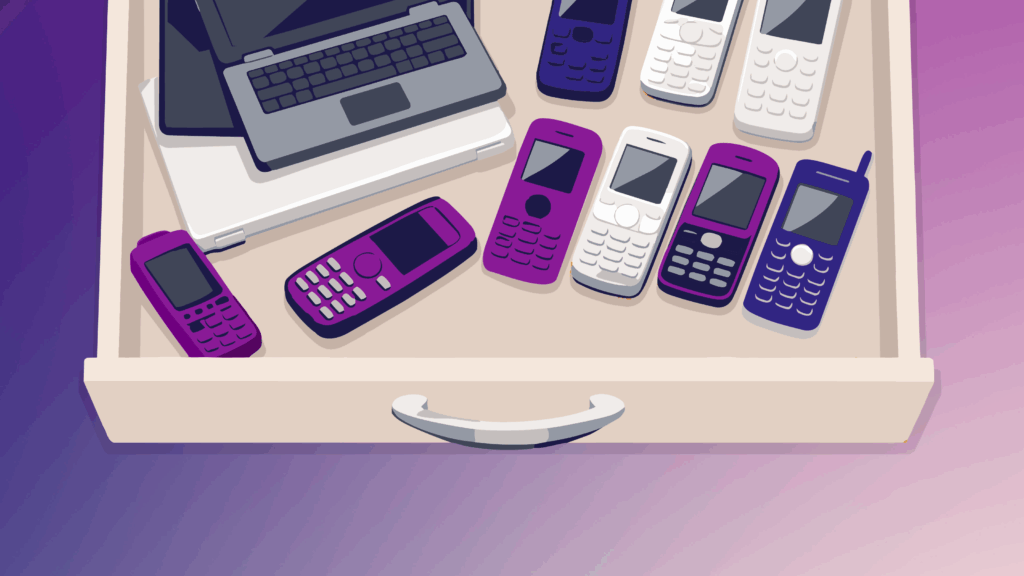
Most workplaces have them. An old laptop tucked away in a drawer, just in case. A cracked tablet no one uses anymore. A smart TV in the staff room that no one remembers setting up. While these devices sit out of sight gathering dust, they can quietly become a serious cyber security risk.
Key Takeaways:
- Forgotten devices can still open the door to attackers. Any device connected to your network is a potential entry point, even if it’s rarely used.
- Outdated tech is a common weak spot. Old or neglected devices often lack updates and proper security, making them easy targets.
- Simple housekeeping reduces real risk. Regular audits, updates and removing unused devices can significantly strengthen your cyber security.
Out of sight shouldn’t mean out of mind
Any device connected to your network is effectively a door into your business, even if no one is actively using it.
Older or forgotten devices are especially risky because they often run outdated software, miss important security patches, or use weak (or default) security settings. Cyber criminals actively look for these easy entry points because they’re less likely to be monitored or maintained.
What happens if one is compromised?
A breach that starts with an overlooked device can quickly turn into a much bigger business problem.
Attackers may gain access to sensitive information such as customer data, financial details or intellectual property. They could disrupt your network, leading to downtime, lost productivity and lost revenue. In many cases, the long-term damage to trust and reputation can be even harder to recover from.

How to secure your devices
Reducing the risk doesn’t have to be complicated, but it does require consistency.
Regularly audit your network to identify every device that’s connected, including older or rarely used hardware. Disconnect and safely remove any devices that are no longer needed.
Ensure that firmware and software are kept up to date on all active devices, including computers and phones. Use strong authentication methods wherever possible, and consider segmenting your network so that less critical devices don’t have access to sensitive systems.
How to secure your devices
Reducing the risk doesn’t have to be complicated, but it does require consistency.
Regularly audit your network to identify every device that’s connected, including older or rarely used hardware. Disconnect and safely remove any devices that are no longer needed.
Ensure that firmware and software are kept up to date on all active devices, including computers and phones. Use strong authentication methods wherever possible, and consider segmenting your network so that less critical devices don’t have access to sensitive systems.

Don’t let forgotten tech become your weak link
Your cyber security is only as strong as your most vulnerable device.
Taking the time to identify and secure forgotten technology could be the difference between business as usual and becoming the next headline.
For more guidance and to stay up to date on the latest cyber security trends and scams, enrol in the Cyber Wardens training program today.